The Complete Origins of Bitcoin
Behind Every Myth There Is a Tragedy
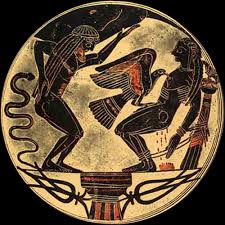
Prometheus' Curse
Dave Kleiman's tragic end is but one of the many tragedies that hit the group of people who contributed to inventing Bitcoin.
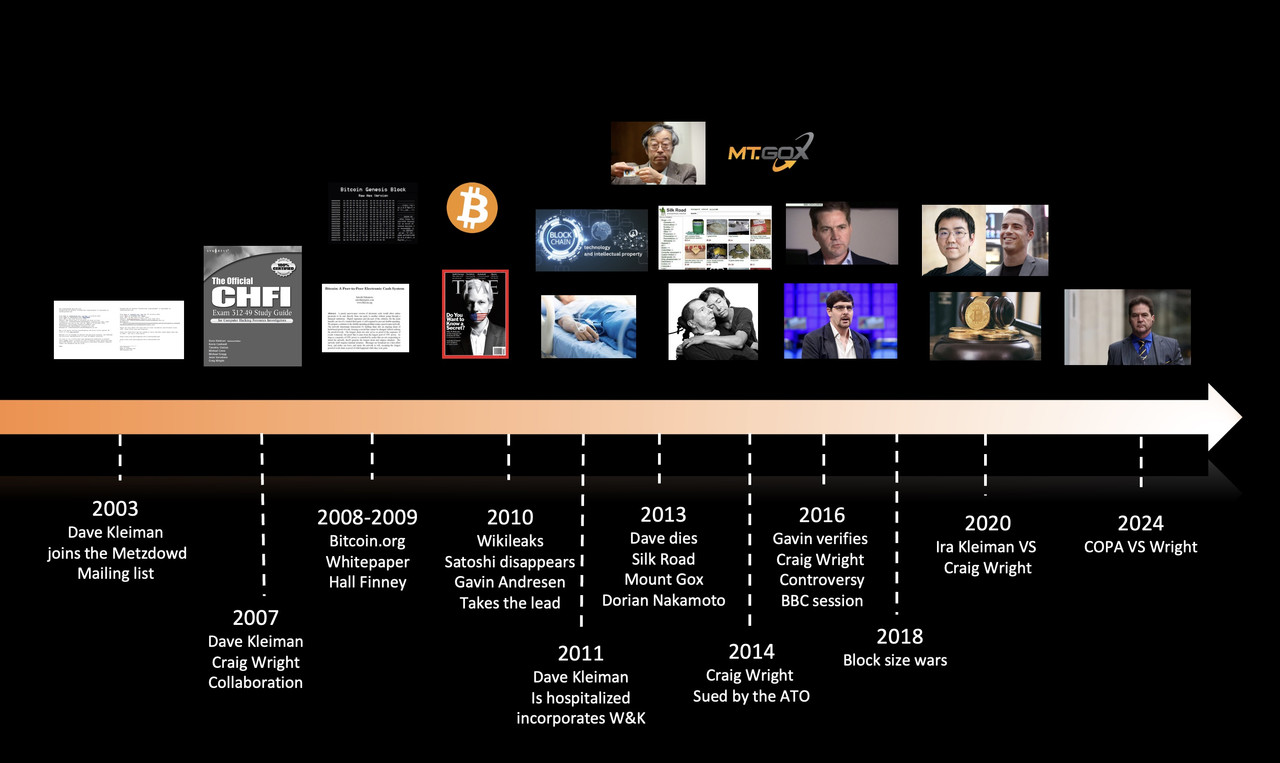
In 2014, Craig presented Dave as one of the three key people behind Bitcoin. We have already established how in many respects, Dave's life complemented the Satoshi puzzle. Let's look into the other people mentioned by Craig over the years and see how they fit in the puzzle.
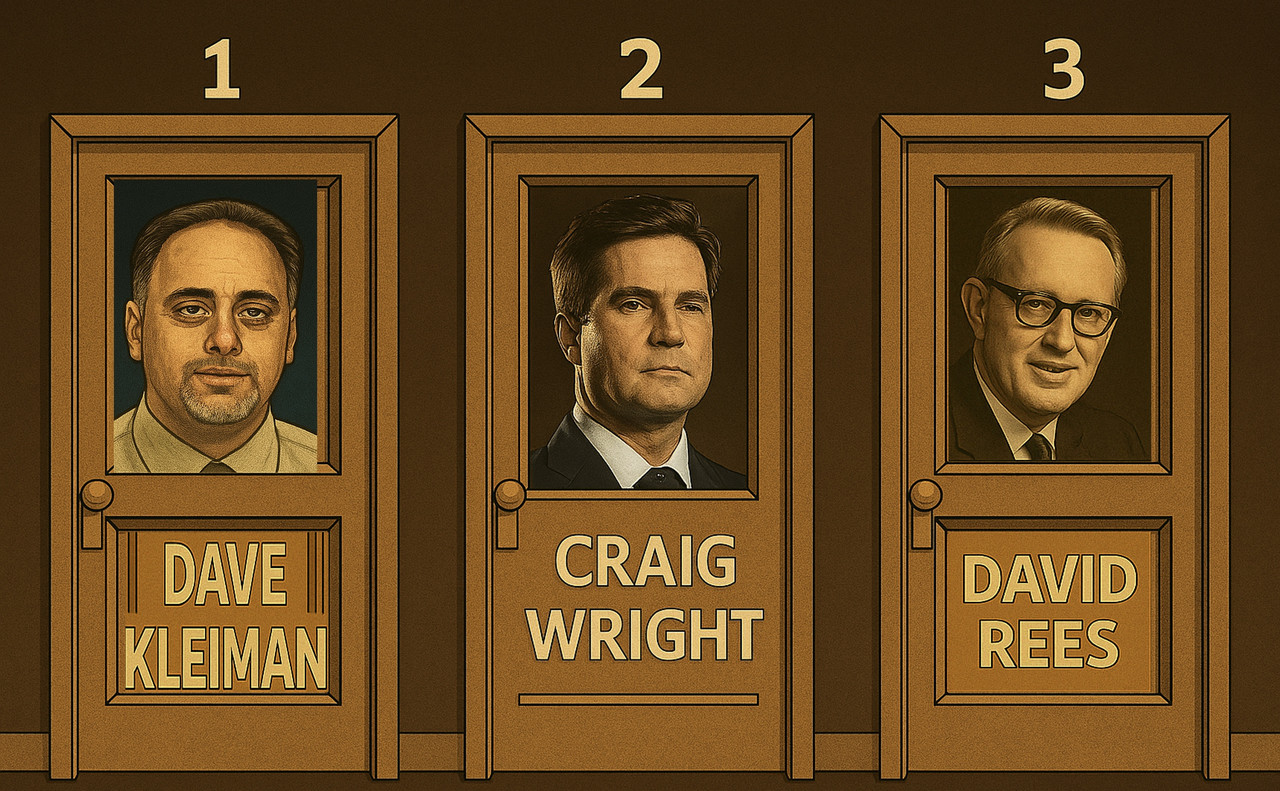
According to Wright, the Satoshi team also included David Rees, a renowned British mathematician whose reputation was first established during World War II as he worked alongside Alan Turing in breaking the codes of the Enigma machine.
The British flavour of Satoshi's writing, punctuation, spelling, vocabulary, may well be explained by Rees' editorial contributions. Not much of David Rees' contribution to Bitcoin transpired during the court proceedings involving Craig and Ira Kleiman. David Rees passed away in 2013.
We are left with an incomplete picture of how Dave Kleiman, Craig Wright, and potentially David Rees collaborated. This problem is compounded by Craig altering significantly his account of the conditions in which Bitcoin was invented.
Craig's Shifting Narrative
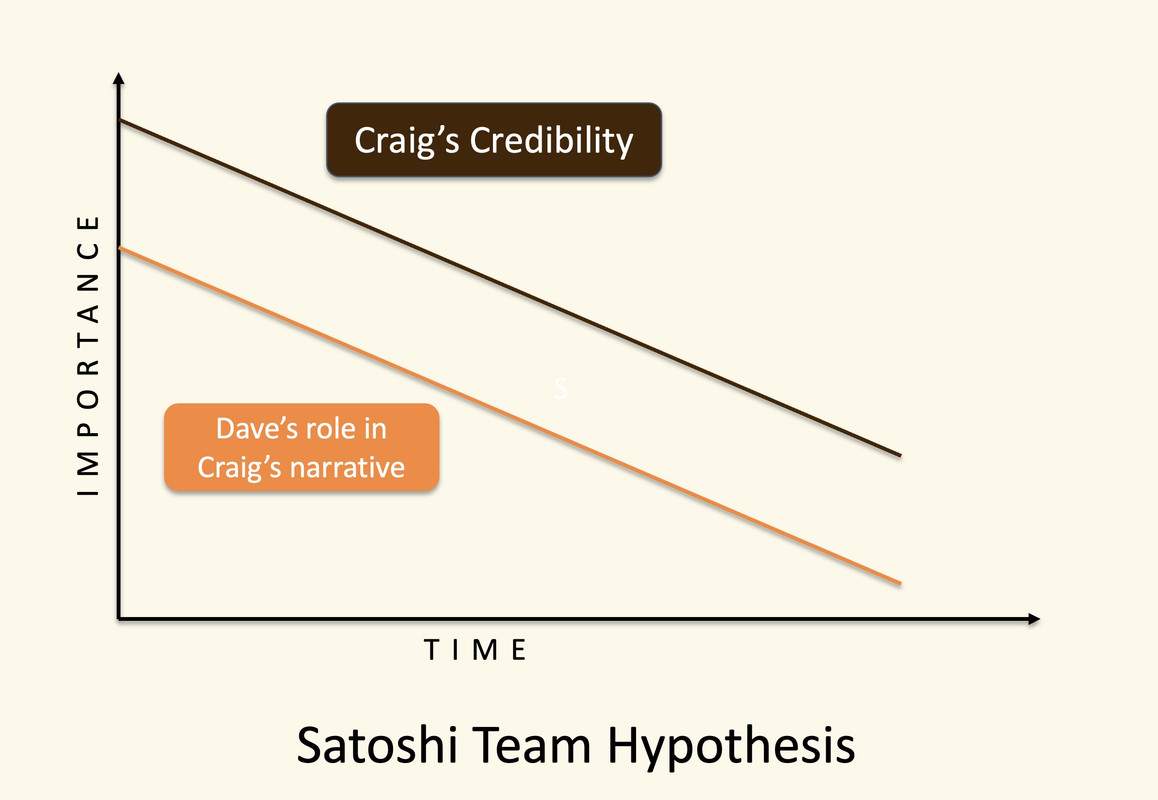
Craig's narrative regarding how the "Satoshi team" operated was victim of externalities, specifically when Dave's estate took him to court over the misappropriation of W&K Info Defense assets. In 2014 and 2016, he emphasized Kleiman's centrality. But as litigation with Ira Kleiman progressed, he began minimizing Dave's contributions, claiming he merely edited some code. This strategic repositioning appears motivated by legal risk.
Which leads to the question: how can we trust anything Craig says? He had a vested interest in coming out as Satoshi in 2016 and in downplaying Dave's role from 2019 onwards.
The more Wright has tried to distance himself from Dave, the less credible his own story becomes.
It was established in court that Craig backdated documents related to W&K, forged Dave's signature, and failed to provide cryptographic controls over thousands of Bitcoin wallets that he alleged were part of W&K's legacy.
And so we must look for evidence that Craig cannot refute. One such piece of evidence came from another mystery person involved in the invention of Bitcoin.
The Satoshi Team Trainee
Introduced in court documents as Craig Wright's assistant during the 2016 BBC proof session, Uyen Nguyen is a SANS Institute affiliate closely linked to both Craig and Dave Kleiman. According to Craig's testimony, Uyen joined the Bitcoin project in 2010 as a trainee under Dave Kleiman. Court proceedings also reveal that she was appointed as the signatory on the W&K filing documents.
Before the December 2015 media tsunami, Uyen had also interacted with renowned cryptographer Ian Grigg, who would help coordinate with Jon Matonis the 2016 verification process with Gavin Andresen.
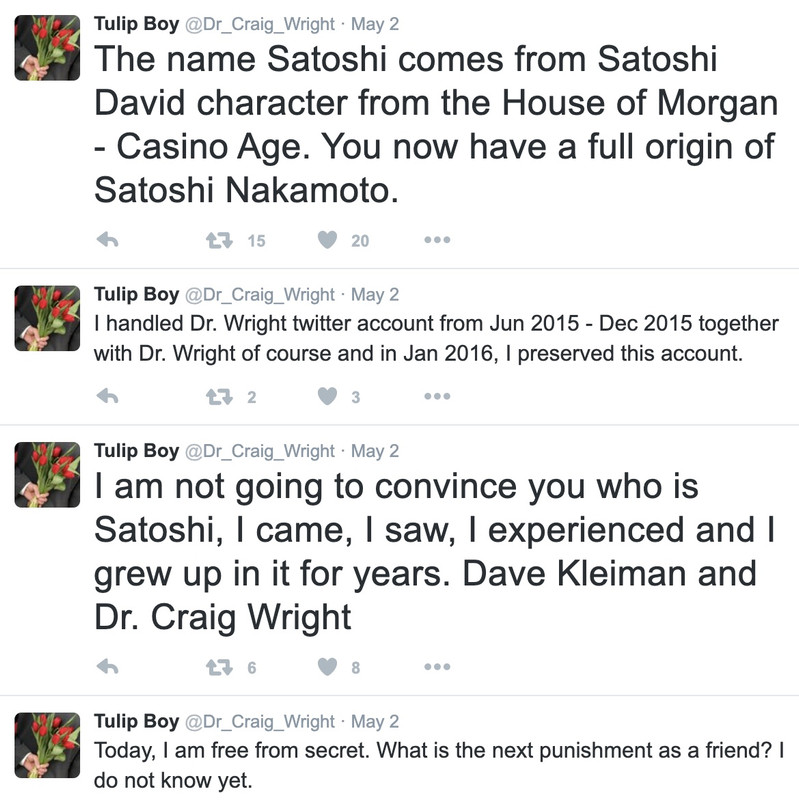
After the failed BBC reveal, Uyen disappeared from public view. But before she did, she posted a handful of cryptic but powerful tweets using the alias "TulipBoy," offering rare glimpses into the early dynamics of the Satoshi team.
In those tweets, she made one thing clear: "Satoshi Nakamoto was Dave Kleiman and Craig Wright." Notably, she never described Dave as a helper or assistant. In her account, at worst, they were equals; at best, Dave came first.
The Origin of the Name
Among Uyen's most astonishing revelations was her explanation for the name Satoshi.
When asked about it, Craig Wright claimed he chose the name as a reference to Ash Ketchum from Pokémon, arguing that "Ash" is short for "Satoshi." It's a connection that feels, at best, arbitrary.
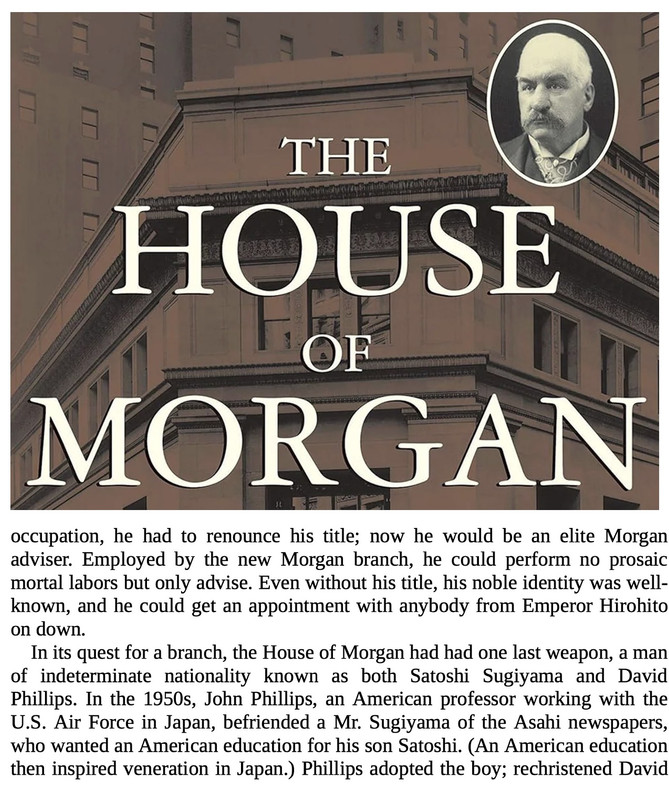
But Uyen told a different story: "The name Satoshi comes from Satoshi David, a character in The House of Morgan, Casino Age. You now have a full origin of Satoshi Nakamoto."
The House of Morgan is a non-fiction book published in the early 1990s that describes the historical emergence of the J.P. Morgan financial empire. One key individual who helped J.P. Morgan restructure Japan's banking system after World War II was a double agent named Satoshi. Born into a Japanese family, young Satoshi was adopted after the war by an American family that gave him the Christian name of David.
Like Satoshi David, Dave Kleiman was also adopted, and he, too, stood on the verge of launching a technology that could transform global banking.
Implications of the TulipBoy Naming Story
There is a massive difference between someone saying, "I picked the name Satoshi because of X," and someone referencing a specific historical figure from a published book, written decades earlier, with verifiable biographical details, no room for backdating, no possibility of fabrication.
Uyen's reference to The House of Morgan is checkable and independent of all narrative manipulation. The historical character, Satoshi David, adopted after World War II and instrumental in reshaping Japan's financial system, is not an improvised backstory.
The dissonance between Craig Wright's Pokémon explanation and the Satoshi David association is in obvious rupture with Craig's claim of being "the main part of it," and his further assertion about Dave's limited role.
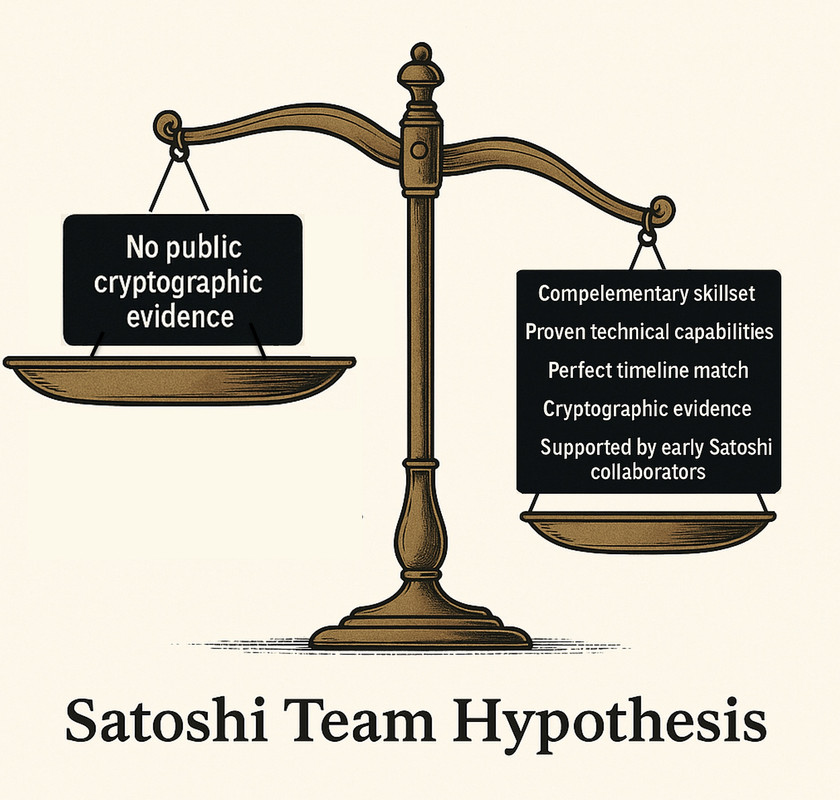
Through years of confusion, contradiction, and forgery, this one detail, the naming origin, points straight at the truth. Not just to Dave Kleiman's involvement, but to the Satoshi team hypothesis itself: anchored by the cryptographic evidence Craig Wright provided to Gavin Andresen, reinforced by the combined technical expertise of Craig and Dave, and supported by consistent timelines and testimonies from early Bitcoin pioneers.
Everything aligns. All of it points in the same direction.
Beyond the Myth
If we build a layered model of the Satoshi team, Kleiman, Wright, Rees, and Uyen, a plausible, coherent origin story emerges. And it explains the inconsistencies, contradictions, and strange behaviours that have marked the public discourse since 2016.
Yes, Craig Wright has committed forgery and perjury. Yes, he refuses to use private keys in public. But remove the burden of the lone genius myth, and the Satoshi team hypothesis not only becomes plausible, it becomes hard to refute.
Why then are these facts not more commonly known? These truths remain largely invisible not just because they disrupt the legend of Satoshi, but because they threaten to rewrite the mythology that underpins Bitcoin's identity.
Back to Monty Hall
Behind every myth, there is a tragedy. Behind the idealised story of a lone, selfless genius inventing a perfect system with perfect motives and perfect anonymity, there are humans: flawed, ambitious, trying to protect their work, claim credit, avoid blame, and survive the storm they helped unleash.
The Kleiman–Wright–Rees team hypothesis sits quietly in the corner of this conversation, surrounded by mounting evidence. In any other context, it would have already triggered a reversal of the burden of proof. It would have become the default hypothesis to challenge.
And yet, in the crypto community, it has been mostly ignored. Like the contestant in Monty Hall who refuses to switch doors despite better odds, most observers cling to their first guess: Nick Szabo, Adam Back, or the mystery itself.
Of course, unanswered questions remain: about each contributor's exact role, about conflicting motivations, about the various trusts Craig Wright and Dave Kleiman set up over the years. But these are not reasons to ignore the obvious. They are invitations to investigate further.
This blog is not the final word. It is an invitation to open source inquiry and end the taboo around the origins of Bitcoin.
Kleiman, Wright, and Rees were not central to the cypherpunk movement. They were outsiders. But outsiders often see what insiders miss. They stood on the shoulders of giants and assembled something enduring.
Bitcoin is no longer just a technology. It is a living organism, shaped, nurtured, and protected by thousands across the globe. And in that sense: we are all Satoshi.
We Are All Satoshi

Act 8 — The Tip of an Iceberg
Beneath the myth of Satoshi lies the true intent of the cryptocurrency industry and the forces that shaped Bitcoin into what it is today.
The investigation continues.