The meeting that changed everything
In April 2016, just a few days before the BBC session, Gavin Andresen, then the leading figure in the Bitcoin community post-Satoshi, met Craig Wright in London. The meeting included several respected members of the Bitcoin community including Jon Matonis, former director of the Bitcoin Foundation who had privately corresponded with Satoshi.
Jon Matonis had contacted Gavin Andresen, urging him to evaluate Wright's claim. Gavin, who had privately corresponded with Satoshi, was seen as the ideal person for the task.
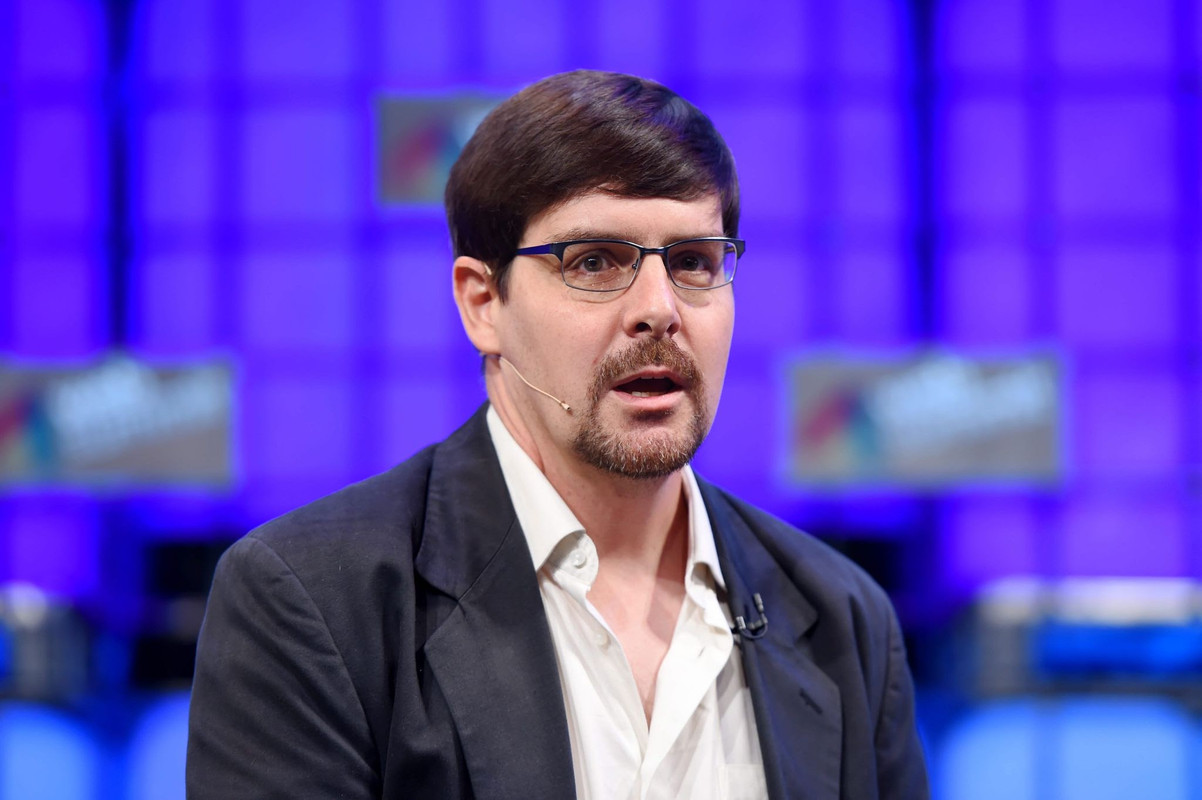
To vet Wright, Gavin first exchanged emails with him. The content and writing style convinced Gavin that Wright's knowledge aligned perfectly with that of Satoshi. Gavin agreed to meet him in person.
They gathered in a London hotel with a brand-new, untampered laptop. In Gavin's presence, Craig Wright used the private key associated with Bitcoin Genesis block to sign a message. Gavin also tested Wright's technical understanding of Bitcoin and insights from the community's early days. To him, the alignment across technical expertise, timeline, writing style, and more importantly, control of cryptographic keys left no doubt: Craig Wright was Satoshi Nakamoto.
A detailed account of this session and the conditions in which it happened remains available on Gavin's blog. He has never retracted it.
Two titans, opposite conclusions
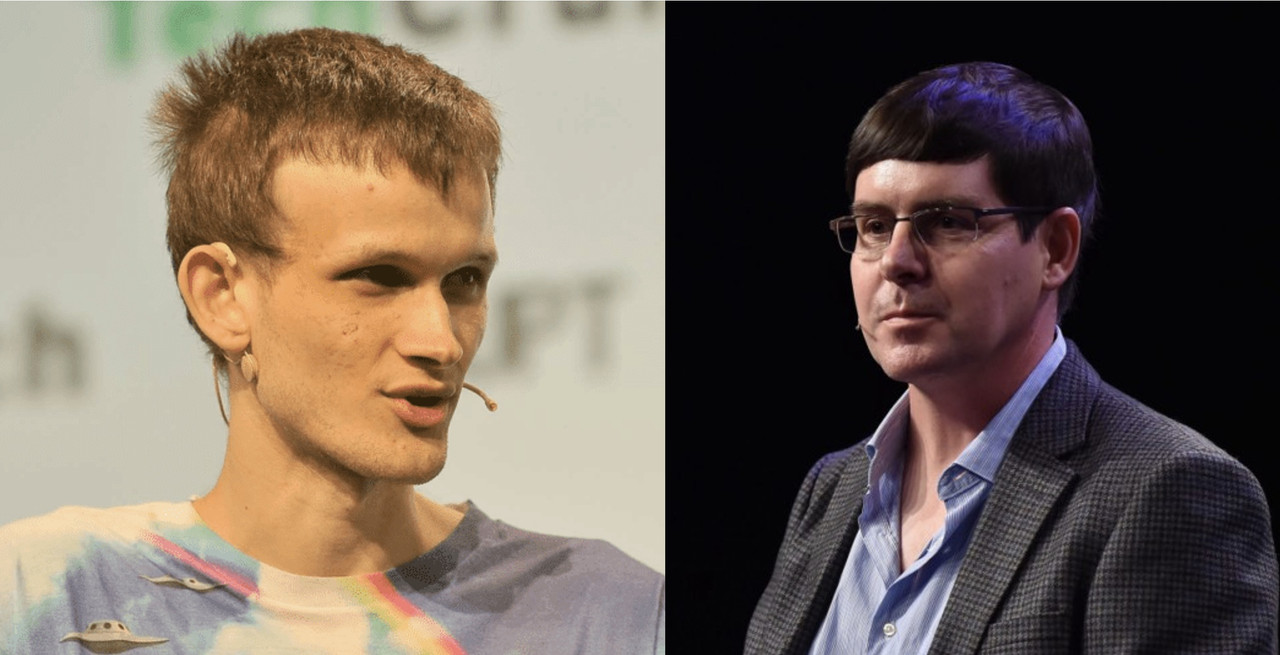
Days after the BBC session, another significant, and often ignored event, took place at the Consensus conference in New York. Gavin Andresen and Vitalik Buterin shared a panel discussion.
Gavin was asked directly who he believed Satoshi was. He answered without hesitation: Craig Wright. He referenced the private key signing, Wright's technical skills, and the coherent timeline.
Then Vitalik responded. Citing signaling theory and Occam's razor, he dismissed the claim. He argued that the lack of public proof made Wright's performance "noisy" and unconvincing.
This moment marked a decisive turning point. Despite Gavin Andresen's credibility and direct involvement with Satoshi, the majority of the crypto community aligned with Vitalik's skepticism. Gavin had private correspondence, firsthand exposure to a successful signature using the genesis key, and deep technical understanding, yet the collective consensus concluded he had been deceived.
Gavin's support for Craig Wright carried a heavy price. Almost overnight, he was stripped of his access to the Bitcoin GitHub repository, the very project he had helped steward for six years.
How could they reach opposite conclusions?
To this day, the events surrounding the 2016 BBC session stand as one of the crypto industry's great paradoxes. What should have been a straightforward demonstration spiraled into reputational collapse.
How could two of the most respected figures in the space, Gavin Andresen and Vitalik Buterin, arrive at completely opposite conclusions on that issue?
From the outside, there was a clear asymmetry of information between Gavin and Vitalik. Gavin had been shown cryptographic proof; Vitalik had not. But crucially, neither had the broader public, which helps explain the deep division that followed within the community.

He believed the doors had all been opened
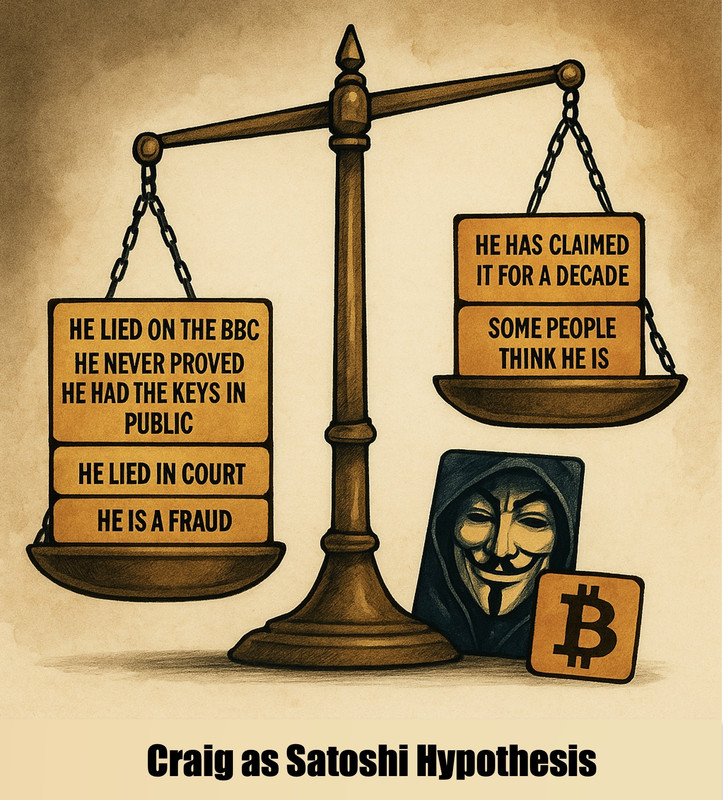
More importantly, the community ultimately sided with Vitalik because Gavin made a critical miscalculation.
He assumed, without reservation, that someone with Craig Wright's deep technical knowledge of Bitcoin, who could replicate Satoshi's writing style in private correspondence and sign a message using the genesis key, had to be Satoshi.
In Monty Hall terms, Gavin believed that the evidence Craig Wright presented had effectively flung open all the other doors. To him, only one door remained closed, and behind it stood Satoshi.
He further assumed, with absolute certainty, that if Craig had produced that proof privately, he would naturally be able, and willing, to reproduce it publicly on a global stage just days later.
On both fronts, history proved him wrong.
So how could Gavin Andresen have been so mistaken?
As with so much in this story, the answer lies in context.