Satoshi Nakamoto as a Team
Once one entertains the possibility that Bitcoin was invented by a group, the investigation paradigm fundamentally shifts. Different individuals with complementary skills and motivations could have collaborated, none of them rightfully or ethically able to claim sole ownership over the Satoshi identity.
Why one person doesn't fit
The myth of Satoshi endures because it attributes superhuman capabilities to a single figure: expert-level coding skills, deep economic and cryptographic knowledge, and flawless written English across 260 posts and over 140,000 words, with no typos.
Satoshi had to conceive and code the Bitcoin software, build and manage the community, ensure constant mining activity, and be responsible for Bitcoin's survival during its precarious first two years. Such breadth and consistency is rare, if not impossible, for a single person.
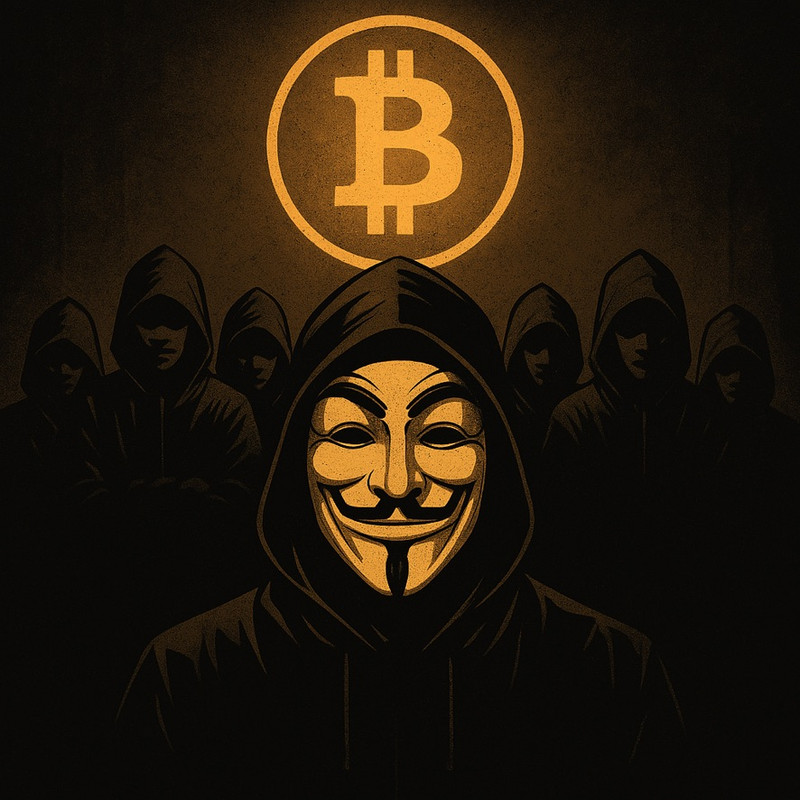
It makes more sense that Satoshi was a group, a collective intelligence whose combined traits created a coherent whole greater than any of its parts. Yet this hypothesis is almost entirely absent from Bitcoin discourse.
A cultural blind spot
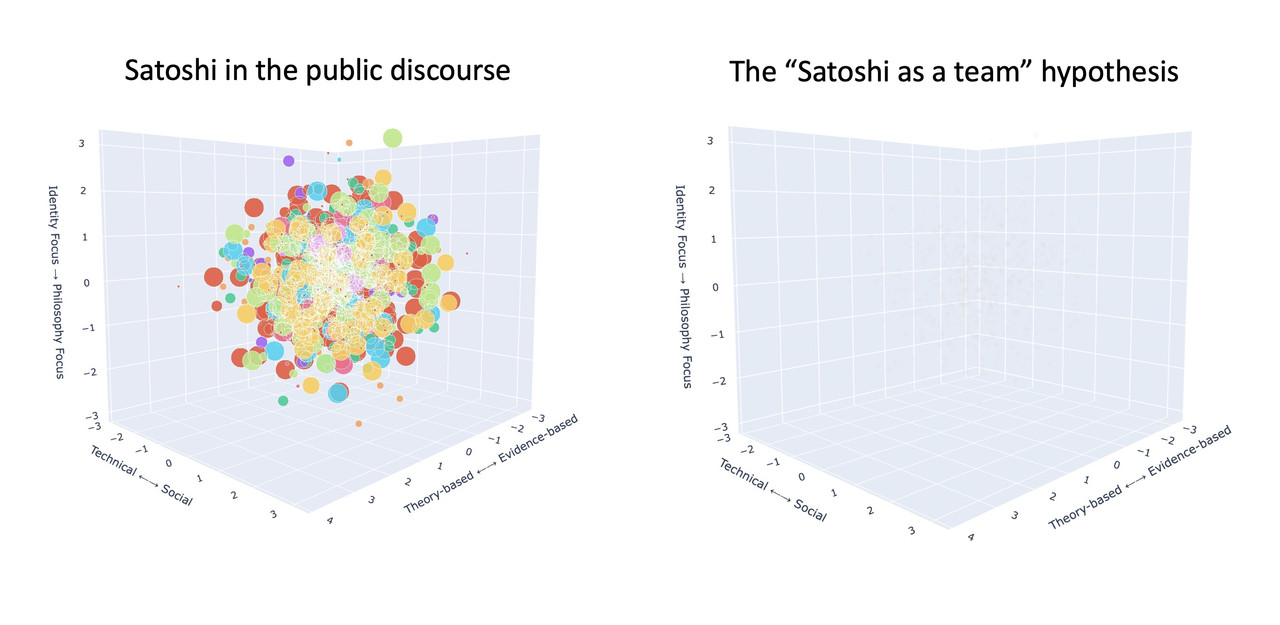
To visualize how the team hypothesis is ignored in public discourse, we developed a 3D map of Satoshi-related content, built from transcripts of the 20 most-watched YouTube videos on the topic.
The map allows users to filter for mentions of "Gavin Andresen" or the idea of a "Satoshi team." When toggled, a striking pattern emerges: only a handful of videos reference Gavin's key meeting with Craig Wright, and almost none mention the team hypothesis at all.
This omission reflects a broader paradigm blindness, an active cultural reluctance to consider that Satoshi might have been a collective, not an individual.
No single member could claim the whole
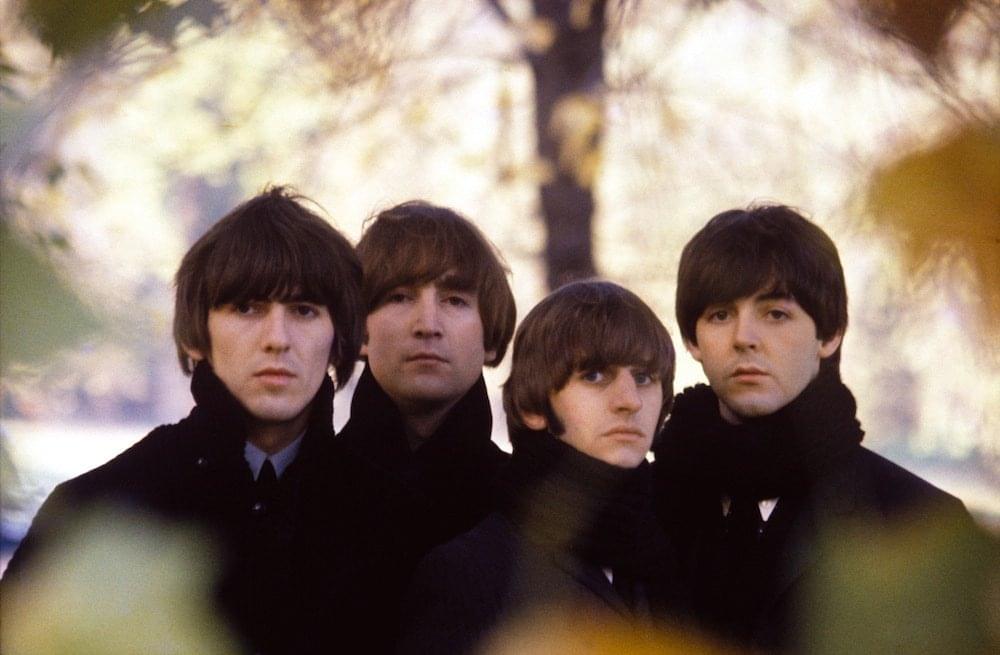
Let's imagine that Ringo Starr claimed, "I am The Beatles." The statement would be at best inaccurate, it would distort the collaborative reality that defined the group. He couldn't unilaterally claim the Beatles' catalog.
The same logic applies here: no single member of the Satoshi team could rightly claim to be Satoshi in isolation.
The team hypothesis reframes the discussion
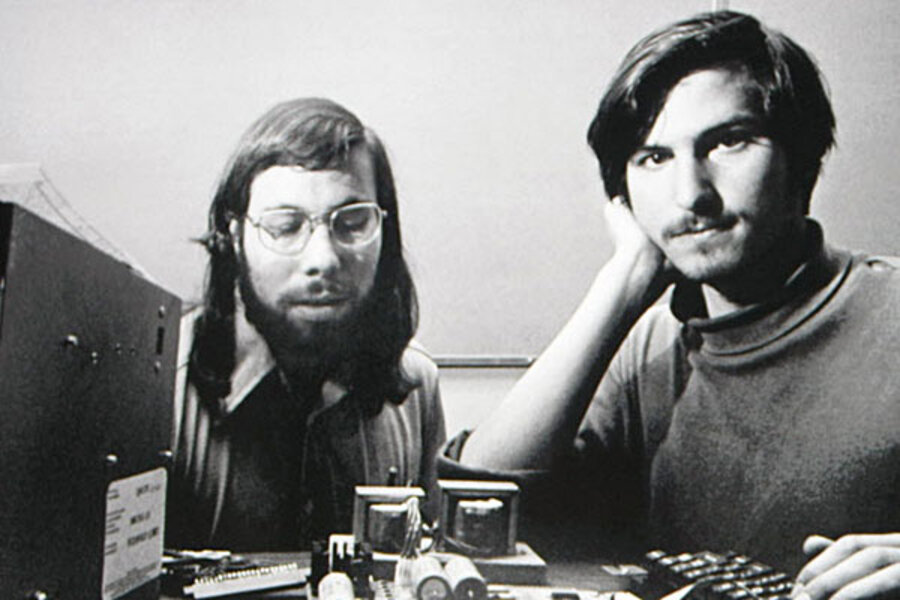
Imagine no one knew who invented the Apple computer. Ten years after its debut, a man named Steve Jobs comes forward, claiming he was the father of Apple. Apple fans would probe: "Are you a hardware engineer?" "Are you a programmer?" Jobs, denying either expertise, would seem an unlikely candidate.
But what if he simply said: "I was the main part of it. Other people helped." Most would still recognize Jobs as the father of Apple, despite knowing that Steve Wozniak assembled the first Apple 1 by hand.
Without Wozniak's technical mastery, there would be no Apple 1. Without Jobs' vision, drive, and strategic leadership, there might have been no Apple at all. History is filled with such partnerships: pairs whose contrasting strengths created something neither could achieve alone.
The team hypothesis clarifies contradictions
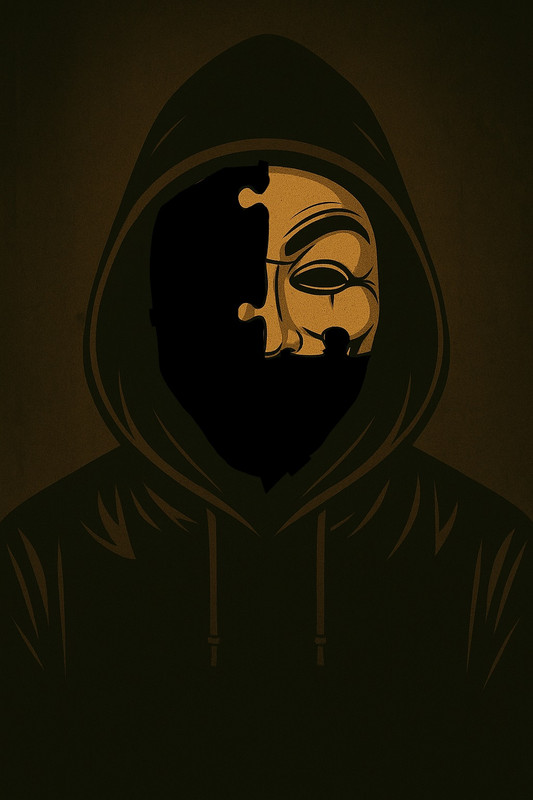
Gavin Andresen, in hindsight, didn't uncover a fraud. He uncovered a fragment, a glimpse behind the Satoshi mask. The public, expecting the full mask, saw only a piece and discarded it entirely.
What if Craig Wright's incomplete image does not disqualify him, but instead confirms that Bitcoin was never the work of a lone genius, but the result of a collaboration between people with different yet complementary expertise?
Once we accept the team hypothesis, many of the contradictions around Craig Wright's behavior begin to make sense: his hesitation during the BBC session, the inconsistencies, the legal entanglements, the allegations of forgery. If Ringo Starr claimed to be the Beatles, he would inevitably struggle, not because he didn't participate, but because proof of the whole is dispersed across multiple collaborators.
A name that keeps surfacing
Paying closer attention to the possibility that Bitcoin was invented by a team, a critical question emerges: Did Craig Wright ever disclose the names of his collaborators?
Turns out that he did. Throughout eight years of controversy, one name surfaces again and again: in court records, in emails, in early IP transfers.
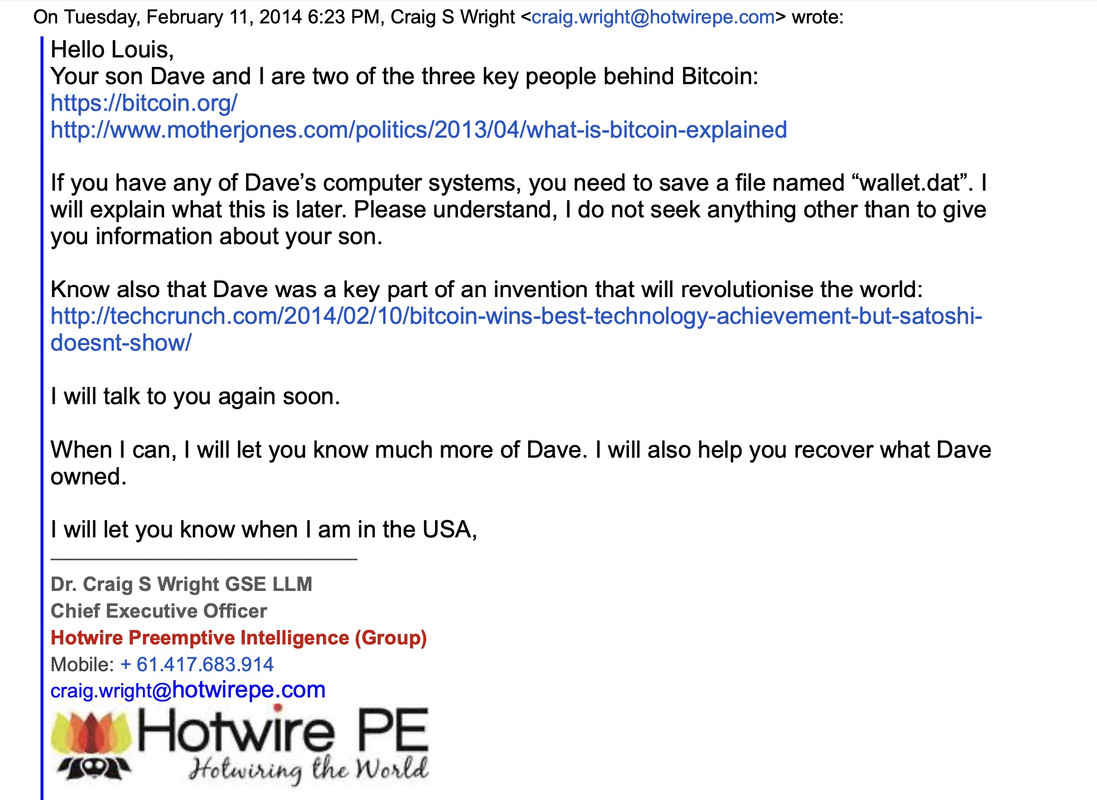
Let's roll back in time to February 2014. A few days before the pivotal meeting with the Australian Tax Office, Craig Wright felt compelled to contact an old Florida-based man named Louis Kleiman. In his email he wrote:
"Your son Dave and I are two of the three key people behind Bitcoin."
Who is Dave Kleiman?