The Missing Piece of the Satoshi Puzzle
With the team hypothesis now established and Craig Wright's role reframed as one potential piece of a larger puzzle, it becomes essential to examine the person he named as "key" to Bitcoin's creation: Dave Kleiman.
Do the other missing pieces fit?
Dave Kleiman (1967–2013)
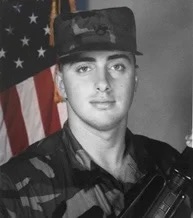
Dave Kleiman was born in 1967 in Palm Beach, Florida. He was adopted by Louis and Regina Kleiman. In 1989, at the age of 21, he was awarded the U.S. Army's Soldier of the Year title and the Army Achievement Medal, with official commendation praising his appearance, knowledge, and dedication to duty, noting he "never failed to produce anything but outstanding results."
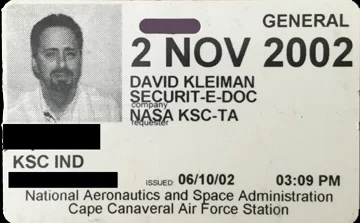
In 1995, a devastating motorcycle accident left Dave paralyzed and confined to a wheelchair. Rather than retreat, he dedicated himself entirely to cybersecurity and encryption systems. His early company, Securit-e-doc, developed cryptographic tools for NASA and the Department of Defense.
A telling technical alignment
Kleiman's expertise with Windows systems was so advanced that he developed custom encryption layers to enhance the operating system, earning Microsoft's Most Valuable Professional award for multiple consecutive years in the "security" category.
The first version of Bitcoin was also built for Windows and remained incompatible with Linux for some time, an odd choice in a cypherpunk community dominated by Unix/Linux users, but one that aligns perfectly with Kleiman's development environment.
The Metzdowd list and the SANS Institute
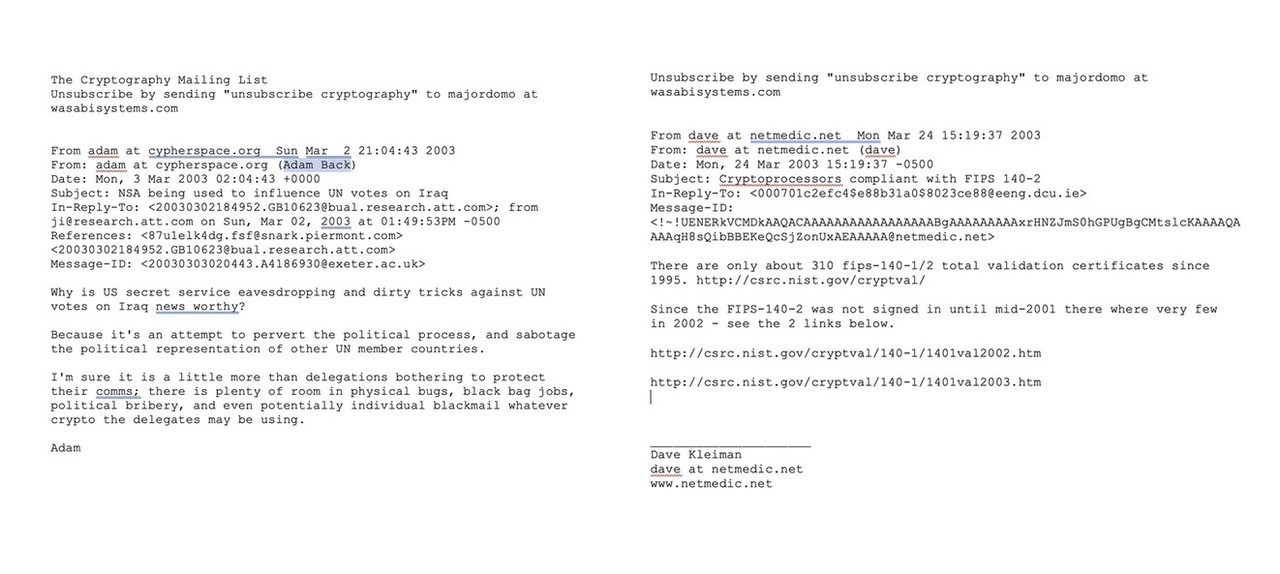
In March 2003, just a few days after Adam Back, Dave Kleiman subscribed to the Metzdowd cryptography mailing list, the same forum where Satoshi would later release the Bitcoin whitepaper. This directly placed him in the intellectual stream from which Bitcoin emerged.
Around the same time, he began collaborating with Craig Wright. Both were regular contributors to the SANS Institute, the world's leading cybersecurity training organization. In 2007, they co-authored the official guide for the CHFI (Computer Hacking Forensic Investigator) certification, one year before the Bitcoin whitepaper was released.
His peers nicknamed him "Dave Mississippi", a reference to the overwhelming number of credentials trailing his name. His technical reputation was validated by Microsoft, NASA, and the U.S. Army. He was deeply embedded in the world of cryptography, self-taught, and driven by a relentless work ethic.

A disappearance that mirrors Satoshi's
What happened to Dave during Satoshi's active period is not well documented. In late 2010, around the same time Satoshi disappeared from the public Bitcoin forum, Dave was admitted to a VA hospital for treatment of life-threatening infections related to prolonged immobility and pressure sores.
Between 2011 and 2013, Dave spent most of his time hospitalized. In February 2011, he founded W&K Info Defense Research LLC in Florida, its main purpose: to develop and hold cybersecurity and cryptographic intellectual property and manage Bitcoin holdings.
In April 2013, Dave died from a combination of infection and drug complications. His body was discovered by a friend nearly two weeks after his death. He died alone, in squalor.
300,000 Bitcoin in encrypted files
When Dave passed away, his family discovered multiple Bitcoin wallets on his machines, alongside encrypted files allegedly containing a significant trove of early Bitcoin. Wright claimed these files were essentially unrecoverable without Dave's knowledge, a scenario that mirrors the dormant Satoshi coins.
After Dave's death, Craig began moving W&K's ownership into his Australian companies, seeking to claim IP and tax benefits associated with the digital assets and intellectual property.
In March 2014, following a hearing with the Australian Tax Office, Craig exchanged emails with Dave's brother, Ira Kleiman. He assured Ira that Dave's shares in W&K belonged to him and informed him that Dave's encrypted files contained over 300,000 Bitcoin.
Dave's estate, led by Ira, later sued Wright for misappropriation of Bitcoin-related assets and intellectual property. In 2021, a U.S. federal court awarded W&K Info Defense Research LLC $100 million in damages, citing improperly transferred software and IP.
Dave Kleiman completes the puzzle
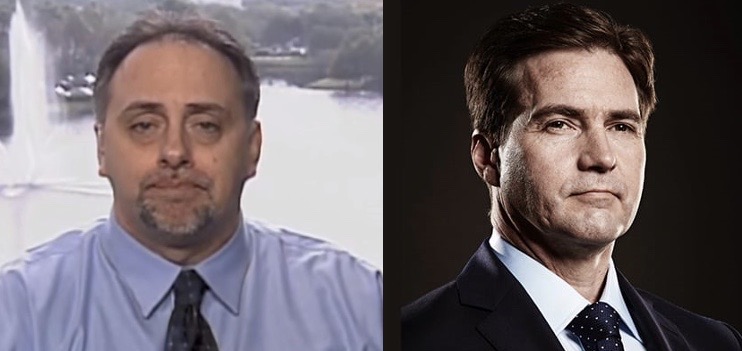
If Satoshi was a team and Craig Wright was part of it, Dave Kleiman completes the puzzle.
Geographic match: Dave lived in Florida, a perfect match for the Satoshi time zone analysis, which ruled out candidates like Craig Wright in Australia and pointed instead to someone active during U.S. East Coast hours.
Technical match: Dave's self-taught programming background fits the profile of Bitcoin's early code. Jeff Garzik, one of the first Bitcoin Core developers, named Kleiman as his top Satoshi candidate, citing idiosyncrasies in the source code that reflected the work of a brilliant but non-academically trained coder, exactly like Dave.
Cryptographic match: The hard drives and encrypted files recovered after Dave's death suggest he controlled the "Satoshi stash", and his death offers a plausible explanation for why hundreds of thousands of Bitcoin have never moved.
The fragments align: timezone, codebase, values, disappearance, all match the negative space left by Satoshi.
Craig Wright mentioned not one but three key contributors to Bitcoin in his first email to Louis Kleiman. The picture isn't fully complete, who were the other contributors?